

We analyzed 23 radiated emissions testing laboratories serving manufacturers across North America and narrowed them down to the top eight selections using our proprietary ranking algorithm for EMC compliance testing facilities. The algorithm evaluated accreditation standards, certification authority status, testing capabilities, turnaround efficiency, and global regulatory expertise.
Our Ranking Methodology
- ISO 17025 Accreditation (30%): Confirms calibrated equipment, traceable measurements, and documented quality systems, preventing certification delays and avoiding redundant testing across regions.
- FCC TCB or Certification Authority Status (25%): Enables labs to issue certifications directly, removing third-party review and reducing approval timelines by one to three weeks.
- Testing Accuracy and Chamber Validation (20%): Validated chambers and calibrated equipment ensure emissions data reflect real device performance and are accepted by global regulators.
- Turnaround Time and Automation (15%): Automated testing shortens report delivery from days to the same or next day, reducing overall launch impact.
- Global Regulatory Expertise (10%): Experience across major frameworks supports multi-market access without repeated measurements.
Best Radiated Emissions Testing Labs 2026: Comparison Table
| Rank | Laboratory | ISO 17025 | TCB Status | Turnaround | Markets |
| 1 | MiCOM Labs | Yes | TCB, FCB, NB, RCB | 5-7 days | 85+ Countries |
| 2 | Eurofins MET Labs | Yes | TCB | 7-10 days | USA, Canada, EU |
| 3 | Intertek | Yes | TCB | 10-14 days | 100+ Countries |
| 4 | HCT America | Yes | NVLAP 200092-0 | 7-10 days | 100+ Countries |
| 5 | Bay Area Compliance Labs | Yes | TCB (A1-A4, B1-B4) | 8-12 days | 50+ Countries |
| 6 | Keystone Compliance | Yes | Accredited Lab | 10-14 days | 70+ Countries |
| 7 | CKC Laboratories | Yes | Accredited Lab | 12-15 days | Global |
| 8 | TÜV Rheinland | Yes | TCB | 12-16 days | 65+ Countries |
1. MiCOM Labs
MiCOM Labs operates as the leading radiated emissions testing facility for manufacturers requiring accelerated multi-region certification. Headquartered in Pleasanton, California, with facilities in China and India.
- ISO 17025 Accreditation Status: A2LA accredited (Certificate 2381-01) covering unintentional and intentional radiators from 9 kHz to 220 GHz.
- Certification Authority Recognition: FCC TCB, ISED FCB, EU RED Notified Body, UKCA CAB, Japan MIC RCB.
- Testing Accuracy & Chamber Validation: Validated chambers with NSA measurements from 30 MHz to 40 GHz; automated measurement sequences eliminate manual errors.
- Turnaround Time & Automation: MiTest® automated platform provides 5-7 business day turnaround.
- Global Regulatory Expertise: Direct certification pathways for 85+ countries.
| Summary of Online Reviews |
| Destacado por completar proyectos “más de una semana antes de lo previsto” y por su “amplia experiencia en certificaciones de cumplimiento regulatorio”. |
2. Eurofins MET Labs
Eurofins MET Labs proporciona pruebas de emisiones radiadas integradas con servicios de certificación de dispositivos inalámbricos, incluyendo mediciones SAR y caracterización de patrones de antena.
- ISO 17025 Accreditation Status: Acreditado por UKAS cubriendo radiadores intencionales y no intencionales de 9 kHz a 40 GHz.
- Certification Authority Recognition: TCB reconocido por la FCC para la certificación de radiadores intencionales.
- Testing Accuracy & Chamber Validation: Tres instalaciones validadas con equipos de medición calibrados según los requisitos de ANSI C63.4.
- Turnaround Time & Automation: Entrega estándar de 7-10 días hábiles con opciones de despacho acelerado.
- Global Regulatory Expertise: Soporte de certificación FCC, CE/RED e ISED con rutas de aprobación establecidas.
| Summary of Online Reviews |
| Reconocido por sus “servicios integrales de cumplimiento de la FCC” y su experiencia específica en “pruebas NFC y mediciones SAR”. |
3. Intertek
Intertek opera globalmente como un TCB designado por la FCC con acreditación ISO 17025 y capacidades completas de certificación internacional.
- ISO 17025 Accreditation Status: Acreditación ISO 17025 con múltiples ubicaciones de laboratorio a nivel mundial.
- Certification Authority Recognition: FCC TCB, organismo de certificación de productos ISO 17065.
- Testing Accuracy & Chamber Validation: Procedimientos establecidos de validación de cámaras mantenidos en todas las instalaciones globales.
- Turnaround Time & Automation: Entrega típica de 10-14 días hábiles para grandes carteras de productos.
- Global Regulatory Expertise: Servicios de certificación global que cubren más de 150 países.
| Summary of Online Reviews |
| Valorado por su capacidad de “guiar a través del proceso de certificación de la FCC” y revisar productos para “cumplir con la fecha de finalización deseada”. |
4. HCT America

HCT America se especializa en pruebas de emisiones radiadas con doble experiencia en certificación FCC de América del Norte y aprobaciones del mercado asiático.
- ISO 17025 Accreditation Status: Acreditado por NVLAP (Código de laboratorio 200092-0) cubriendo todas las clases de transmisores FCC.
- Certification Authority Recognition: Laboratorio de pruebas acreditado por la FCC con asociaciones TCB establecidas.
- Testing Accuracy & Chamber Validation: Cámaras validadas que cumplen con los requisitos de medición de la FCC con protocolos de calibración mantenidos.
- Turnaround Time & Automation: 7-10 días hábiles con una opción de certificación acelerada de una semana.
- Global Regulatory Expertise: Soporte para FCC, KC de Corea y SRRC de China, eliminando retrasos por intermediarios.
| Summary of Online Reviews |
| Identificado como una “opción de primer nivel para el cumplimiento global de productos” con gran fortaleza en los “estándares KC para radio en Corea”. |
5. Bay Area Compliance Laboratories (BACL)

BACL opera como un TCB reconocido por la FCC con experiencia especializada en pruebas de amplificadores de señal y mediciones DFS.
- ISO 17025 Accreditation Status: Acreditación ISO 17025 con estatus de organismo de evaluación de la conformidad acreditado por SCC.
- Certification Authority Recognition: FCC TCB (Alcance A1-A4, B1-B4), acreditado por SCC.
- Testing Accuracy & Chamber Validation: Cámaras semi-anecoicas validadas para pruebas de dispositivos con y sin licencia.
- Turnaround Time & Automation: 8-12 días hábiles, dependiendo de la complejidad del dispositivo.
- Global Regulatory Expertise: Servicios de certificación FCC e ISED con rutas de acceso al mercado canadiense.
| Summary of Online Reviews |
| Reconocido como un “Cuerpo de Certificación de Telecomunicaciones reconocido por la FCC” con servicios integrales para equipos inalámbricos. |
6. Keystone Compliance
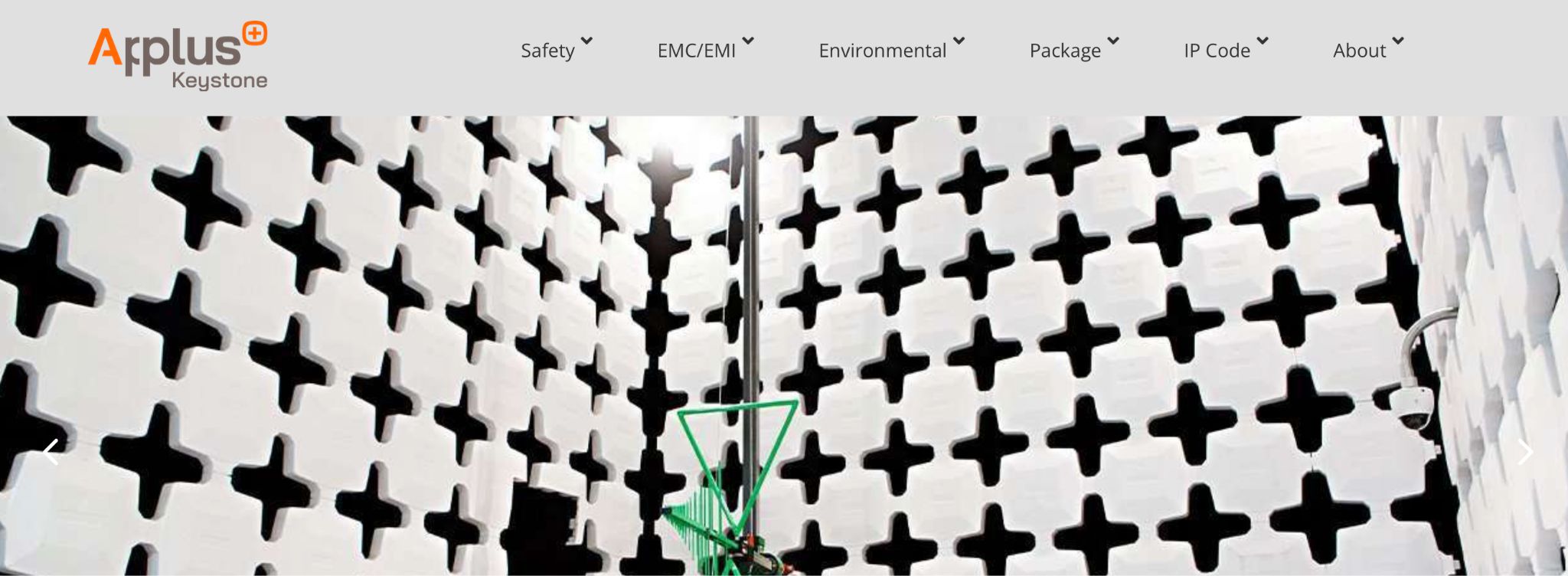
Keystone Compliance enfatiza las pruebas de pre-cumplimiento y el soporte de ingeniería para fabricantes que enfrentan desafíos de emisiones radiadas.
- ISO 17025 Accreditation Status: Acreditado bajo ISO 17025 para pruebas de EMC y ambientales.
- Certification Authority Recognition: Laboratorio de pruebas acreditado con asociaciones TCB establecidas.
- Testing Accuracy & Chamber Validation: Cámaras compatibles con ANSI C63.4 con capacidades de medición de 9 kHz a 40 GHz.
- Turnaround Time & Automation: 10-14 días hábiles para pruebas formales; detección rápida en pre-cumplimiento.
- Global Regulatory Expertise: Soporte para FCC Parte 15/18 y CE/RED con enfoque en la resolución de problemas de emisiones.
| Summary of Online Reviews |
| Destacado por sus “informes reconocidos globalmente” y apreciado por sus servicios de consultoría técnica en etapas tempranas. |
7. CKC Laboratories
Con más de 50 años de experiencia, CKC Laboratories ofrece pruebas de emisiones radiadas tanto para requisitos comerciales de la FCC como para especificaciones militares MIL-STD-461.
- ISO 17025 Accreditation Status: Acreditación ISO 17025 que cubre pruebas de EMC comerciales y militares.
- Certification Authority Recognition: Laboratorio de pruebas acreditado por la FCC con asociaciones de certificación.
- Testing Accuracy & Chamber Validation: Cámaras validadas que cumplen con ANSI C63.4 y MIL-STD-461.
- Turnaround Time & Automation: 12-15 días hábiles, reflejando protocolos de prueba exhaustivos.
- Global Regulatory Expertise: Certificación FCC y CE con experiencia especializada en cumplimiento de estándares militares.
| Summary of Online Reviews |
| Conocido por sus “servicios de prueba EMC de primer nivel” y su trayectoria de más de cinco décadas en la industria. |
8. TÜV Rheinland
TÜV Rheinland opera como un organismo de certificación con sede en Alemania cuyo estándar de ingeniería apoya a fabricantes que buscan el marcado CE junto con la certificación FCC.
- ISO 17025 Accreditation Status: Acreditación ISO 17025 con reconocimientos de SAC, NATA, UKAS y NVLAP.
- Certification Authority Recognition: FCC TCB, organismo de certificación acreditado por ANSI y A2LA.
- Testing Accuracy & Chamber Validation: Cámaras validadas mantenidas en toda su red global de laboratorios.
- Turnaround Time & Automation: Entrega típica de 12-16 días hábiles.
- Global Regulatory Expertise: Fortaleza en regulaciones europeas y servicios de certificación global.
| Summary of Online Reviews |
| Reconocido como un “Cuerpo de Certificación de Telecomunicaciones acreditado” con capacidades técnicas integrales. |
Best for Fastest Turnaround
MiCOM Labs’ MiTest® automation reduces delays in manual data compilation. HCT America and Eurofins MET Labs provide expedited options for urgent certification needs.
| Rank | Laboratory | Average Turnaround |
| 1 | MiCOM Labs | 3-7 business days |
| 2 | HCT America | 7-10 business days |
| 3 | Eurofins MET Labs | 7-10 business days |
| 4 | Bay Area Compliance Labs | 8-12 business days |
Best for Multi-Region Certification
Intertek’s global presence provides the broadest geographic reach, while MiCOM Labs holds direct certification authority status with five major regulatory bodies.
| Rank | Laboratory |
| 1 | Intertek |
| 2 | MiCOM Labs |
| 3 | TÜV Rheinland |
| 4 | Eurofins MET Labs |
Request This Comparison in PDF Format
To request a copy of this radiated emissions testing laboratory comparison in PDF format, contact MiCOM Labs here.